



Pompeii eruption victims' bodies found in ancient ruins
The remains were found in Civita Giuliana, 700 metres northwest of the centre of ancient Pompeii, in an underground chamber in the area of a large villa being excavated.
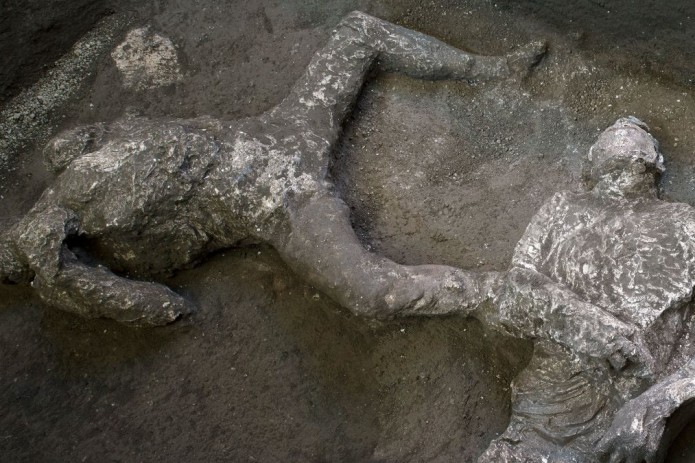
Archaeologists have discovered the exceptionally well-preserved remains of two men scalded to death by the volcanic eruption that destroyed the ancient Roman city of Pompeii in 79 AD, the Italian culture ministry said on Saturday November 21).
One was probably a man of high status, aged between 30 and 40, who still bore traces of a woollen cloak under his neck.
The second, probably aged 18 to 23, was dressed in a tunic and had a number of crushed vertebrae, indicating that he had been a slave who did heavy labour.
The remains were found in Civita Giuliana, 700 metres northwest of the centre of ancient Pompeii, in an underground chamber in the area of a large villa being excavated.
The men's teeth and bones were preserved, and the voids left by their soft tissues were filled with plaster that was left to harden and then excavated to show the outline of their bodies.
"These two victims were perhaps seeking refuge when they were swept away by the pyroclastic current at 9 am., when the plume gets to Pompeii, destroying the higher part of the city completely, killing everybody in its path," said Pompeii director Massimo Osanna.
Pompeii, 23 km (14 miles) southeast of Naples, was home to about 13,000 people when it was buried under ash, pumice pebbles and dust as it endured the force of the Vesuvio eruption which froze the city in time. The ruins were not discovered until the 16th century and organised excavations began about 1750.
.png "YouTube UZREPORT TV")